- Contact Us :
- 055-3412312-16
- info@mehboobgroupofindustries.com

TR Girder vs. RCC Roof: Which is Best for Your Home?

Prime vs. Re-Rolled Steel: Why “Cheap” Sarya is Dangerous
December 13, 2025
Billet vs. Scrap: What is Your Steel Actually Made Of?
December 29, 2025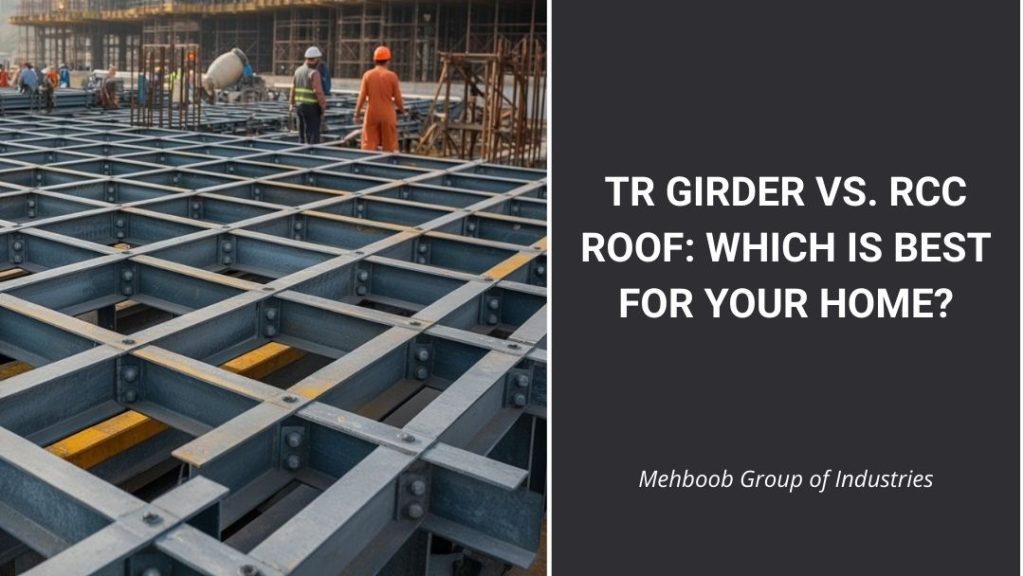
Building a home in Pakistan comes with countless decisions, but few are as crucial as choosing the right roofing system. Whether you’re constructing a new house in Lahore, renovating property in Karachi, or building your dream home in Islamabad, understanding the difference between TR Girder roofs and RCC (Reinforced Cement Concrete) roofs can save you lakhs of rupees and years of regret.
This comprehensive guide breaks down everything Pakistani homeowners need to know about these two popular roofing options, helping you make an informed decision that suits your budget, climate needs, and long-term goals.
What is a Girder (I-Beam)?
A girder, commonly known as an I-Beam due to its distinctive “I” shaped cross-section, is a horizontal structural steel member designed to support heavy loads. In Pakistani construction, girders serve as the primary load-bearing elements in roofing systems.
Understanding the Structure
The I-Beam consists of three main components:
- Top Flange: The upper horizontal section that distributes load
- Web: The vertical section connecting both flanges
- Bottom Flange: The lower horizontal section providing stability
Load Capacity and Strength
Girders are manufactured in various sizes, with common specifications in Pakistan including:
- 4-inch girders: Suitable for spans up to 12 feet
- 6-inch girders: Ideal for spans between 12-16 feet
- 8-inch girders: Perfect for larger spans up to 20 feet
The load-bearing capacity depends on the girder’s size, steel quality, and spacing. Most Pakistani suppliers offer MS (Mild Steel) girders that can handle substantial dead loads and live loads when properly installed.
What is T-Iron (TR)?
T-Iron, locally called “TR” or “Tee Iron” in Pakistani markets, refers to smaller steel sections with a T-shaped cross-section. These are the secondary structural elements that work alongside girders to create a complete roofing framework.
Role of TR in Roof Construction
TR sections are placed perpendicular to the main girders, typically spaced 12-18 inches apart. They serve several important functions:
- Supporting brick tiles: TR creates a grid for laying burnt clay tiles or concrete slabs
- Distributing weight: Transfers roof load evenly to the main girders
- Creating ceiling space: Allows for proper ventilation and insulation
Common TR Sizes in Pakistan
Pakistani steel markets offer TR in various sizes:
- 1.5-inch TR: For lightweight residential roofing
- 2-inch TR: Standard choice for most homes
- 2.5-inch TR: For heavier tile configurations
The combination of girders and TR creates what Pakistanis commonly call a “Girder Wali Chhat” or steel-framed roof with tile covering.
Understanding RCC/Lanter Roofs
RCC (Reinforced Cement Concrete) roofs, often called “Lanter” in local terminology, involve pouring concrete over a steel reinforcement framework. This method has become increasingly popular in urban Pakistani construction.
Components of RCC Roofing
- Steel reinforcement bars (Sariya)
- Cement, sand, and aggregate mixture
- Wooden or steel shuttering
- Curing process lasting 21-28 days
Cost Comparison: TR Roof vs. Concrete (Lanter) Roof
Understanding the financial implications is crucial for Pakistani homeowners working within specific budgets. Let’s break down the costs based on current 2024 market rates.
TR Girder Roof Costs (Per Square Foot)
| Component | Approximate Cost (PKR) |
| Girders | 180-220 |
| T-Iron | 80-120 |
| Burnt Tiles | 100-150 |
| Labor | 150-200 |
| Miscellaneous | 50-80 |
| Total | 560-770/sq ft |
RCC Roof Costs (Per Square Foot)
| Component | Approximate Cost (PKR) |
| Steel (Sariya) | 200-280 |
| Cement | 150-200 |
| Sand & Aggregate | 80-120 |
| Shuttering | 100-150 |
| Labor | 200-280 |
| Total | 730-1030/sq ft |
Key Financial Insights
TR Girder Roofs typically cost 20-30% less than RCC roofs for the same covered area. For a standard 1,500 square foot home, this translates to savings of approximately PKR 250,000-400,000.
However, consider these factors:
- Multi-story construction: RCC roofs are mandatory for buildings above two floors
- Span limitations: Girder roofs face restrictions on room sizes
- Future modifications: RCC offers easier expansion possibilities
Heat Insulation: Why TR Roofs Keep Pakistani Homes Cooler
One of the most significant advantages of TR Girder roofs with tiles is their superior thermal performance a crucial consideration given Pakistan’s scorching summers.
The Science Behind Cooler TR Roofs
Natural Air Gap: The space between tiles and the ceiling creates an insulating air pocket that prevents direct heat transfer. This gap can reduce indoor temperatures by 5-8°C compared to solid concrete roofs.
Tile Properties: Burnt clay tiles (locally called “Khaprel”) have natural insulating properties. Their porous structure absorbs less heat than dense concrete, keeping interiors comfortable.
Ventilation Benefits: The slight gaps between tiles allow hot air to escape, creating passive cooling that reduces dependency on air conditioning.
Comparative Temperature Analysis
| Roof Type | Peak Summer Indoor Temperature |
| RCC Roof (without treatment) | 42-45°C |
| RCC with waterproofing | 38-42°C |
| TR Girder with tiles | 34-38°C |
| TR with false ceiling | 32-35°C |
Energy Savings
Pakistani homeowners with TR roofs report 30-40% lower electricity bills during summer months due to reduced AC usage. In cities like Multan, Jacobabad, and Sibbi where temperatures exceed 45°C, this difference becomes even more pronounced.
Rust Protection: How to Paint and Treat Girders Before Installation
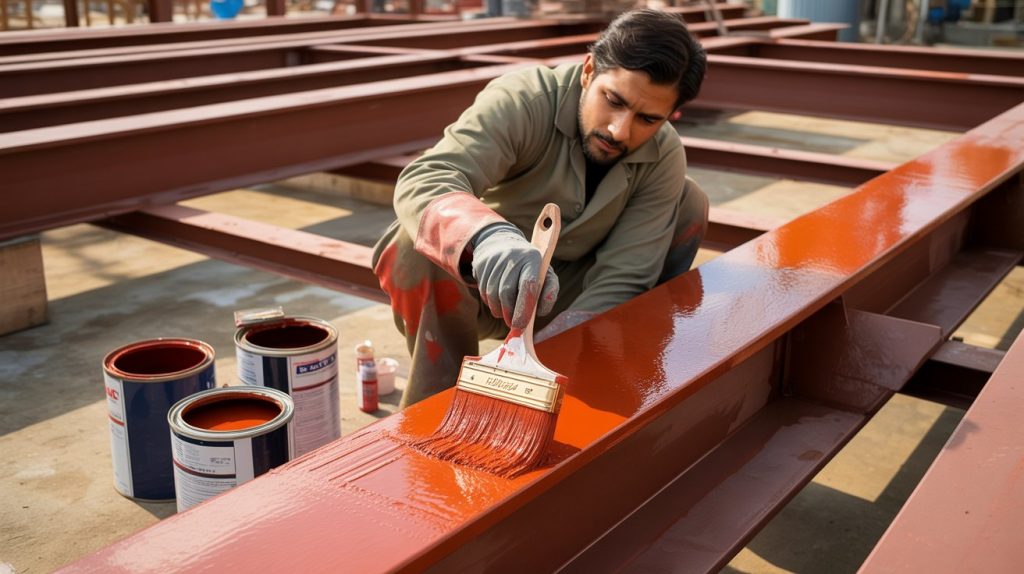
Steel’s primary enemy is moisture, and Pakistan’s varying climate from Karachi’s coastal humidity to Punjab’s monsoons demands proper rust protection for TR Girder systems.
Step-by-Step Rust Prevention Process
Step 1: Surface Preparation
- Remove any existing rust using wire brushes or sandpaper
- Clean surfaces with mineral spirits to remove oil and grease
- Ensure completely dry conditions before proceeding
Step 2: Primer Application
Apply a high-quality anti-rust primer. Popular options in Pakistani markets include:
- Red Oxide Primer: Most economical choice (PKR 3,500-4,500 per gallon)
- Zinc Chromate Primer: Superior protection (PKR 5,500-7,000 per gallon)
- Epoxy Primer: Best for coastal areas (PKR 8,000-12,000 per gallon)
Step 3: Paint Coating
After primer dries (24-48 hours), apply two coats of:
- Oil-based enamel paint
- Synthetic enamel
- Bituminous paint for portions embedded in walls
Step 4: Touch-Up During Installation
Welding and cutting during installation damage protective coatings. Ensure workers reapply primer and paint to all exposed areas immediately.
Professional Tips for Long-Term Protection
- Embed girder ends in concrete: Protects portions inside walls
- Maintain proper drainage: Prevent water accumulation on roof
- Annual inspections: Check for rust spots and address immediately
- Use galvanized TR: Though costlier, galvanized steel offers 25+ years protection
Pros and Cons Summary
TR Girder Roof
Advantages:
- Lower construction cost
- Excellent heat insulation
- Faster construction time
- Easy repairs and maintenance
- Traditional aesthetic appeal
Disadvantages:
- Limited to 1-2 story buildings
- Span restrictions (typically 16-20 feet maximum)
- Requires rust maintenance
- Less suitable for modern architectural designs
RCC Roof
Advantages:
- Supports multi-story construction
- Unlimited design flexibility
- No rust concerns
- Better for large spans
- Higher resale value in urban areas
Disadvantages:
- Higher construction cost
- Poor heat insulation (requires additional treatment)
- Longer construction time
- Requires proper curing
- Difficult to repair if cracks develop
Which Roof Should You Choose?
Choose TR Girder Roof If:
- Building a single or double-story home
- Budget is a primary concern
- Living in extremely hot regions
- Preferring traditional construction methods
- Room spans are under 16 feet
Choose RCC Roof If:
- Planning multi-story construction
- Future vertical expansion is possible
- Modern architectural design is preferred
- Located in earthquake-prone zones (with proper engineering)
- Building commercial property
Conclusion
When comparing TR Girder vs. RCC Roof, both roofing systems have served Pakistani homeowners for decades, each with distinct advantages. Budget-conscious families building single-story homes in hot climates will find TR Girder roofs offer unbeatable value and comfort. Meanwhile, urban developers planning larger structures will prefer RCC roofs despite higher costs.
Whatever you choose, ensure proper engineering consultation, quality materials from reputable Pakistani suppliers, and skilled labor. Your roof protects everything beneath it—investing wisely today prevents costly problems tomorrow.